

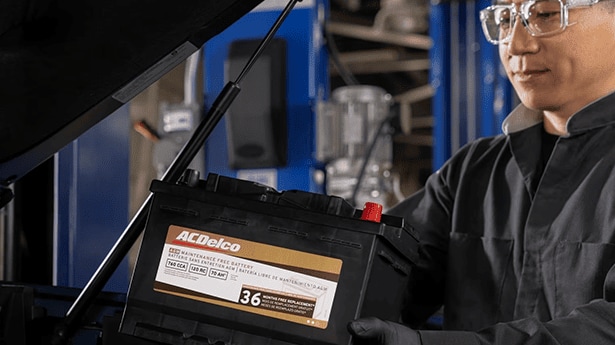
Preparing a Chevrolet battery for winter requires testing its state of charge and internal resistance, cleaning corrosion from the terminals, securing physical mountings, and verifying that the alternator charges properly. Testing a battery before freezing weather arrives ensures it maintains sufficient voltage to crank the engine in sub-zero temperatures. If the battery is older than three years or exhibits slow cranking, replacing it prevents unexpected winter breakdowns.
A thorough winter preparation routine starts with a visual inspection under the hood. Corrosion naturally builds up on lead-acid battery terminals as a white, blue, or greenish powder. This buildup acts as an electrical insulator, restricting current flow from the battery to the starter motor. Removing terminal cables, cleaning the posts with a dedicated wire brush, and applying anti-corrosion washer pads or protective spray restores full electrical contact.
Checking the battery casing and mounting hardware is equally critical. Temperature fluctuations cause plastic battery cases to expand and contract, while loose hold-down clamps allow road vibration to shake internal lead plates loose. Tightening the mounting bracket prevents physical shock damage during daily drives across local roads in Wooster.
A professional digital battery test completes the preparation process. Modern conductance testers evaluate a battery's internal resistance, state of health, and remaining capacity without fully discharging the unit. If testing reveals low voltage or degraded cranking capacity, our service team at 1119 W Old Lincoln Way can install a factory-matched replacement. You can also give us a quick call at (330) 439-4949 to speak with a service advisor about scheduling an electrical system diagnostic.
Why Does Freezing Weather Strain Your Chevrolet Engine and Battery?
Freezing temperatures slow the internal chemical reactions of a car battery while simultaneously thickening engine oil, forcing the starter motor to draw significantly higher electrical current. At 32°F, a standard lead-acid battery loses approximately 30% of its starting power, and available capacity drops by as much as 50% near 0°F.
The fundamental cause of winter battery strain lies in electrochemistry. Inside a conventional automotive battery, lead plates react with a sulfuric acid electrolyte solution to generate electrical current. As ambient temperatures plummet, these chemical reactions slow down dramatically, limiting the battery's ability to release power quickly.
Concurrently, cold weather drastically increases mechanical resistance inside the engine. Motor oil thickens in sub-freezing temperatures, creating heavy fluid drag on internal moving parts like the crankshaft, pistons, and bearings. When you turn the key or press the start button on a frozen morning, the starter motor must pull substantially more amperes from a weakened battery to turn over the heavy engine components.
Larger powertrains experience this mechanical drag most severely. A full-size SUV like the 2026 Chevrolet Tahoe 4WD equipped with a 5.3L V8 engine requires immense rotational force to crank in sub-zero weather. When vehicles sit parked overnight outdoors along exposed agricultural properties near Honeytown, overnight cold soak thickens engine fluids completely, placing peak electrical demand on the battery during the initial morning start.
Vehicle accessories further compound electrical stress during winter driving. Accessories like heating systems, high-beam headlights, windshield wipers, and heated seating grids draw heavy continuous current. On short trips, the vehicle's alternator may not run long enough to fully replenish the energy spent during a hard cold start, causing the battery's state of charge to drop progressively lower over time.
How Often Do Chevrolet Batteries Need Replacement and Can You Upgrade to AGM?
Chevrolet car batteries generally require replacement every three to five years, though severe winter freezing combined with summer heat degradation often shortens operational lifespan closer to three years. Upgrading from a standard flooded battery to an Absorbent Glass Mat ( AGM) battery is entirely feasible and recommended for winter durability, provided the vehicle's engine control module is properly recalibrated.
While winter is when weak batteries typically fail, summer heat is actually what inflicts the core damage. High engine bay temperatures accelerate internal grid corrosion and evaporate electrolyte fluid inside standard flooded batteries. When winter arrives, the already-damaged internal plates cannot deliver the high cranking current required for freezing starts, leading to sudden battery failure.
Upgrading to an AGM battery offers significant performance benefits for winter vehicle operations:
- Electrolyte fluid is absorbed into woven glass fiber separators, preventing spills and making the battery immune to liquid freezing.
- Internal lead plates are tightly compressed, providing up to twenty times greater vibration resistance than standard flooded units.
- Lower internal electrical resistance enables faster recharge acceptance from the alternator during short winter commutes.
- Delivers up to double the cycling endurance, keeping high-draw electrical accessories running reliably.
When upgrading from a flooded unit to an AGM battery, professional installation is vital. Modern Chevrolet charging systems utilize intelligent battery sensor algorithms to adjust alternator voltage based on battery age, temperature, and chemistry type. Installing an AGM battery requires updating or registering the new battery profile within the engine control computer so the alternator charges at the precise voltage curve needed for glass-mat technology. Drivers looking to upgrade can easily start by ordering a genuine replacement part through our service center.
What CCA Rating Does Your Chevrolet Need for an Ohio Winter?
A Chevrolet battery operating in northern winter climates should meet or exceed the manufacturer's recommended Cold Cranking Amps rating, which typically ranges from 600 to 800 CCA depending on engine displacement and electrical load. Cold Cranking Amps measure the number of amperes a 12-volt battery delivers at 0°F for 30 seconds while maintaining a minimum terminal voltage of 7.2 volts.
Selecting a battery with adequate CCA is essential because starting an engine in sub-zero conditions requires sustained voltage under extreme electrical loads. Unlike Marine Cranking Amps ( MCA), which are measured at a mild 32°F, CCA testing directly reflects a battery's real-world capability during harsh winter cold snaps.
Vehicles equipped with high-compression engines or advanced electronic driver-assist systems demand robust cold-cranking performance. A modern pickup like the 2026 Chevrolet Silverado 1500 LT powered by the 2.7L TurboMax engine depends on precise starter motor speeds to generate swift ignition in sub-freezing weather. Installing a replacement unit that falls below factory CCA specifications leads to slow engine cranking, delayed ignition, or potential electrical fault codes caused by low system voltage during starting.
Another important specification to evaluate alongside CCA is Reserve Capacity ( RC). Reserve Capacity measures how many minutes a fully charged battery can supply a continuous 25-amp current before system voltage drops below 10.5 volts. High reserve capacity provides a critical safety buffer if your alternator fails or if you accidentally leave interior accessories running while parked.
What Is Cabin Preconditioning in a Chevrolet EV and How Does It Protect Winter Range?
Cabin preconditioning in a Chevrolet electric vehicle warms both the high-voltage traction battery pack and the passenger cabin using grid electricity while the vehicle remains plugged into a Level 2 charger. Using utility power for initial heating preserves battery state of charge, helping offset the 15% to 30% range reduction typically experienced on freezing winter days.
Cold weather affects electric vehicles differently than internal combustion models. Lithium-ion battery chemistries experience increased internal electrical resistance when chilled, which temporarily reduces energy transfer rates and regenerative braking capacity. Furthermore, electric vehicles do not produce waste engine heat, meaning cabin climate control must rely entirely on electric resistance heaters or heat pumps powered by the high-voltage battery.
Preconditioning optimizes winter performance through a simple automated process:
- You set a scheduled departure time using your vehicle's infotainment system or mobile app while the EV is connected to home power.
- The vehicle draws electricity from the wall outlet to run thermal management heaters, bringing the traction battery pack to its ideal operating temperature.
- Climate control warms the steering wheel, seating surfaces, and cabin air prior to your drive.
- You unplug and drive away with a fully warmed battery pack and maximum available driving range.
By shifting the heavy energy demand of initial thermal heating to the power grid, preconditioning allows your EV to reserve its onboard battery power strictly for driving. This single practice drastically improves winter driving efficiency and ensures full heater performance from the moment you pull out of your driveway.
Why Buy an ACDelco Battery at a Dealership and Is Discharge Covered by Warranty?
Purchasing an ACDelco Gold or ACDelco GM Original Equipment battery at a Chevrolet service center guarantees direct factory fitment, proper charging system calibration, and nationwide warranty coverage redeemable at any certified GM dealer. Simple battery discharge caused by cold weather, disuse, or leaving cabin accessories on is not a manufacturing defect and is not covered under warranty.
ACDelco batteries are engineered specifically to match the electrical architectures, starter draw requirements, and physical mounting dimensions of Chevrolet vehicles. Factory replacement batteries feature high-density plate paste, corrosion-resistant alloy grids, and robust casing designs built for long-term durability. Moreover, installing an ACDelco unit at a dealership ensures certified technicians perform proper battery registration in your vehicle's engine control module.
Understanding warranty coverage helps set realistic expectations for winter maintenance:
- Covered under warranty: Internal short circuits, open cell welds, plate separation, or premature capacity loss resulting from manufacturing defects during the designated replacement period.
- Not covered under warranty: A discharged battery resulting from extended parking disuse, parasitic draws from aftermarket accessories, cold weather capacity reduction, or key-off cabin accessory usage.
If a healthy battery becomes discharged due to prolonged cold exposure or leaving lights on, it simply requires a professional slow charge and conductance test rather than replacement. Chevrolet service technicians use specialized GM diagnostic equipment to test discharged batteries accurately, determining whether a battery requires a simple recharge or a complete warranty replacement under the vehicle's Bumper-to-Bumper Limited Warranty or ACDelco parts warranty.
What Buyers Ask Most About Chevrolet Winter Battery Care in Wooster
Q: How do I know if my battery is failing before it leaves me stranded?
Common warning signs of a failing battery include a slow or dragging engine crank during morning starts, clicking sounds when turning the ignition key, flickering interior dashboard lights, or an illuminated battery warning light on your instrument cluster. Physical signs such as white powder corrosion on the terminals or a bulging battery case also indicate immediate replacement is needed before freezing temperatures arrive.
Q: Can a discharged car battery freeze solid during an Ohio winter?
Yes, a fully discharged car battery can freeze at temperatures around 20°F because the electrolyte solution turns primarily into water as electrical charge depletes. Conversely, a fully charged battery will not freeze until temperatures drop well below -70°F. If a battery freezes, its internal lead plates expand and rupture, making it unsafe to jump-start or recharge due to fire or explosion risks.
Q: Why do short winter trips drain a vehicle battery faster?
Short commutes do not provide enough driving time for the alternator to fully replenish the high energy used during a cold engine start, especially when high-draw accessories like seat warmers, rear defrosters, and cabin heaters operate simultaneously. Over several days, these brief trips cause a net loss in battery charge, leaving the vehicle vulnerable to a no-start condition on freezing mornings.
Q: Does Chevrolet Roadside Assistance cover winter battery jump-starts?
Chevrolet Roadside Assistance provides emergency jump-start service for covered vehicles, bringing factory-trained support directly to your location if a dead battery leaves you stranded. You can reach Chevrolet Roadside Assistance at 1-800-243-8872 for manufacturer-backed emergency service quality included with your vehicle ownership and warranty coverage.
Q: How can I safely clean battery terminal corrosion at home?
For weekend DIY projects, clean mild terminal corrosion by applying a mixture of baking soda and warm water with a wire brush to neutralize acid deposits. Disconnect the negative cable first, scrub the terminal posts clean, dry them thoroughly, and reinstall the cable clamps tightly before applying anti-corrosion spray or petroleum jelly to seal out air and moisture.
Schedule Your Winter Battery Inspection at Chevrolet Of Wooster
Taking proactive care of your vehicle's electrical system before sub-zero temperatures arrive eliminates the stress of unexpected winter no-starts. Our certified service technicians provide comprehensive battery testing, terminal cleaning, alternator diagnostics, and factory-certified ACDelco replacements tailored to your specific vehicle model.
To prepare your Chevrolet for the cold months ahead, stop by our service department at 1119 W Old Lincoln Way, Wooster, OH 44691. You can also contact our team directly by calling (330) 439-4949 or conveniently scheduling your service appointment online today.
*Prices and MSRP referenced in this article are estimates for informational purposes only and do not constitute an offer to sell. See dealer for complete details. *Fuel economy estimates shown may differ from official EPA ratings and should not be relied upon as a guarantee of actual vehicle performance.