

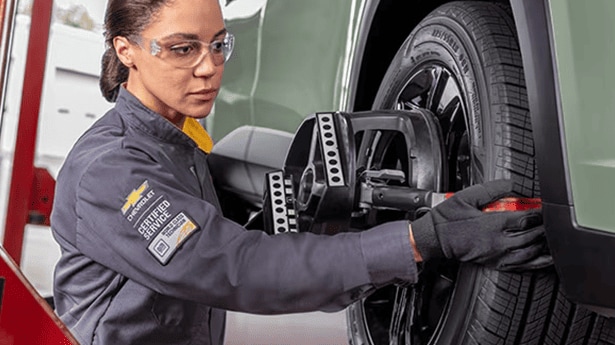
For drivers across Ohio, keeping a vehicle in peak operating condition requires specialized care that matches the exact engineering of the vehicle. When you follow directions to our service department at 1119 W Old Lincoln Way, Wooster, OH 44691, you are choosing a team that understands every system under the hood and is committed to providing expert care for your vehicle. For professionals commuting daily toward Wooster Community Hospital, having a reliable vehicle is essential for navigating local traffic and seasonal weather. Our factory-trained technicians use specialized diagnostic tools built for GM vehicles, helping ensure repairs and maintenance meet factory standards.
Every service visit completed at our certified department is logged in the national service database of General Motors. This creates a permanent, verifiable maintenance history that supports future warranty claims and can enhance resale or trade-in value. Whether you need a routine oil change or complex electrical diagnostics, you can get started by scheduling your service appointment online or by giving our team a quick call at (330) 439-4949 to speak with an advisor.
Using genuine GM and Chevrolet OEM parts in Certified Service is another critical factor. These parts are engineered specifically for each model and trim, providing correct fit, designed performance, and better protection for factory warranty coverage than generic aftermarket components. If you install non-authorized parts, warranty coverage may be affected depending on the part and the repair situation, and vehicle safety could be compromised if the parts are improper or installed incorrectly.
Rigorous Training and Factory Certification Standards for Chevrolet Technicians
Chevrolet vehicles feature complex electrical networks, advanced safety suites, and specialized powertrains that require highly technical expertise. GM Certified Service technicians must meet demanding requirements for factory training, ensuring they stay up to date with the latest engineering standards. This training is a continuous process, combining web-based learning modules with intensive hands-on instruction delivered directly by manufacturer instructors.
Technicians study the exact schematics, electrical systems, and mechanical tolerances of every model in the lineup. This includes specialized instruction on the brand's latest propulsion systems, such as the electric drivetrains in modern EVs and advanced internal combustion setups like the 2.7-liter turbo engine or the 1.5-liter turbocharged engine. By completing this brand-specific training, technicians can accurately diagnose, service, and repair vehicles according to the strict guidelines established by the factory.
This standard of expertise is backed by years of on-the-job experience. Across the network, certified technicians bring a combined total of over 10,000 hours of training and experience to the service bay. This deep familiarity with the brand's engineering means that work is performed correctly the first time, protecting the vehicle's long-term durability and maintaining the integrity of its safety features.
State-of-the-Art GM Diagnostic Systems and Techline Connect Software
Modern vehicles rely on dozens of onboard computers to manage everything from engine timing to driver-assist safety features. To communicate with these systems, certified service departments utilize the GM Multiple Diagnostic Interface, commonly known as the MDI 2. This high-speed vehicle communications interface links a technician's computer directly to the electronic control modules of the vehicle, allowing for precise diagnostics, module programming, and software configuration.
This hardware works in tandem with Techline Connect software, which is a proprietary application built specifically for GM vehicles. Techline Connect integrates diagnostic data, live vehicle programming, and official Technical Service Bulletins into a single, unified interface. This integration allows technicians to view real-time sensor readings, check for software updates, and reference factory-issued repair bulletins simultaneously.
Having access to these specialized tools is critical for identifying hidden issues before they lead to mechanical breakdowns. While generic code readers used by independent shops can only retrieve basic trouble codes, Techline Connect provides deep access to the vehicle's proprietary software. This ensures that complex electronic issues, transmission shifting concerns, or sensor calibration errors are identified and resolved according to factory specifications.
How Long Does a Chevrolet Multi-Point Inspection Take and What Does It Cover
A certified multi-point vehicle inspection generally takes between 30 to 45 minutes to perform when combined with a standard service like an oil change. This comprehensive assessment provides a detailed look at the vehicle's current health, helping catch minor wear before it turns into a major repair. Technicians use a color-coded system (green, yellow, and red) to indicate the urgency of any required maintenance, making it easy to understand which items need immediate attention.
During the inspection, technicians evaluate key safety and performance systems. They check fluid levels, inspect the battery and starting system, measure tire tread depth, examine brake pads and rotors, and assess the suspension and steering components. They also inspect wear items like windshield wiper blades and cabin air filters to ensure optimal visibility and cabin air quality.
For tradespeople and farmers driving heavy-duty trucks across the gravel roads and rolling farmland around Honeytown, this routine evaluation is vital. Hauling heavy agricultural gear in a 2026 Chevrolet Silverado 1500 places continuous stress on the steering, suspension, and brakes. A regular multi-point inspection ensures that these critical components remain in safe working order under heavy loads.
The Recommended Maintenance Schedule for the Chevrolet Equinox
Following a structured maintenance schedule is the most effective way to protect the longevity and efficiency of your SUV. For example, the 2026 Chevrolet Equinox, equipped with a 1.5-liter turbocharged engine and a smooth CVT transmission, relies on precise service intervals to maintain its EPA-estimated 26 city / 29 hwy fuel economy. Adhering to these intervals helps prevent premature component wear and keeps the vehicle running as efficiently as designed.
The maintenance schedule for this model centers on routine services performed at specific mileage milestones:
- 7,500 Miles: At this interval, the vehicle requires an oil and filter change using factory-approved oil of the correct viscosity, along with a complete tire rotation to ensure even tread wear.
- 22,500 Miles: In addition to the standard oil change and tire rotation, the cabin air filter must be replaced to maintain clean airflow through the climate control system.
- 45,000 Miles: This milestone requires replacing the engine air filter to protect the 1.5-liter engine from airborne debris, helping preserve its performance and efficiency.
Staying current with these recommended services also protects your eligibility for warranty coverage. If a mechanical component fails and there is no record of required maintenance being performed, the manufacturer may deny the warranty claim. Keeping detailed records of every certified service visit provides the documentation needed to prove the vehicle has been cared for according to factory standards.
Understanding GM Protection Plans and Factory Warranty Coverage Limits
Every new Chevrolet is backed by a 3-year/36,000-mile bumper-to-bumper limited warranty and a 5-year/60,000-mile powertrain limited warranty. While this factory coverage provides excellent initial protection, many owners choose to extend their peace of mind with an official Chevrolet Protection Plan. These extended service contracts are designed to prevent unexpected repair costs after the factory warranty expires, and they are available for most vehicles up to eight years old or with fewer than 100,000 miles.
These protection plans are offered in three distinct coverage tiers to suit different ownership needs:
- Powertrain Plan: This plan focuses on the core mechanical assemblies, covering the engine, transmission, drive axle, and hybrid or electric propulsion components where applicable.
- Silver Plan: Building on the Powertrain coverage, this tier adds protection for major vehicle systems, including the suspension, climate control, steering, brakes, and electrical components.
- Platinum Plan: As the most comprehensive option, the Platinum Plan covers up to 1,500 components, including advanced high-tech electronics, audio systems, and navigation units, closely mirroring the bumper-to-bumper factory warranty.
In addition to component coverage, these plans include valuable travel benefits. Owners receive comprehensive roadside assistance, which covers towing coverage up to a stated limit to the nearest authorized service center, flat tire changes, battery jump-starts, and emergency fuel delivery of up to three gallons. The plans also provide rental car reimbursement of up to $40 per day for up to 10 days and trip interruption compensation of up to $200 per day for up to five days if a breakdown occurs more than 100 miles from home.
Common Questions About Chevrolet Maintenance and Service
Q: How do I contact Chevrolet Roadside Assistance when I need emergency help?
A: You can obtain immediate support by contacting Chevrolet Roadside Assistance: 1-800-243-8872 anytime, day or night. This manufacturer-backed service is included with your vehicle's factory warranty and provides professional assistance for towing, flat tires, lockouts, and emergency fuel delivery.
Q: What is considered a wear-and-tear item not covered by warranties?
A: Wear items are components designed to wear down through normal vehicle use, such as brake pads, windshield wiper blades, clutches, and engine air filters. These consumables must be replaced periodically at the owner's expense and are excluded from both factory warranties and extended GM Protection Plans.
Q: Can I transfer my Chevrolet Protection Plan to a new owner if I decide to sell my vehicle?
A: Yes, the Chevrolet Protection Plan is fully transferable to a private buyer if you decide to sell your vehicle. To complete the transfer, you must submit a written request to the warranty administrator and pay any applicable transfer fee.
Q: What should I do if my check engine light begins flashing while driving?
A: A flashing check engine light indicates a severe engine misfire or emission system fault that can cause immediate, expensive damage to components like the catalytic converter. You should pull over safely as soon as possible, turn off the engine, and arrange for a tow to an authorized service center rather than continuing to drive.
Q: Does the Chevrolet Protection Plan cover commercial use or racing?
A: Standard protection plans generally exclude competitive driving, racing, and certain commercial uses; review the official plan terms for details. However, you can choose to purchase an optional surcharge for light-duty commercial use if your vehicle is used for business purposes, though competitive racing remains entirely prohibited.
*Prices and MSRP referenced in this article are estimates for informational purposes only and do not constitute an offer to sell. See dealer for complete details. *Fuel economy estimates shown may differ from official EPA ratings and should not be relied upon as a guarantee of actual vehicle performance.